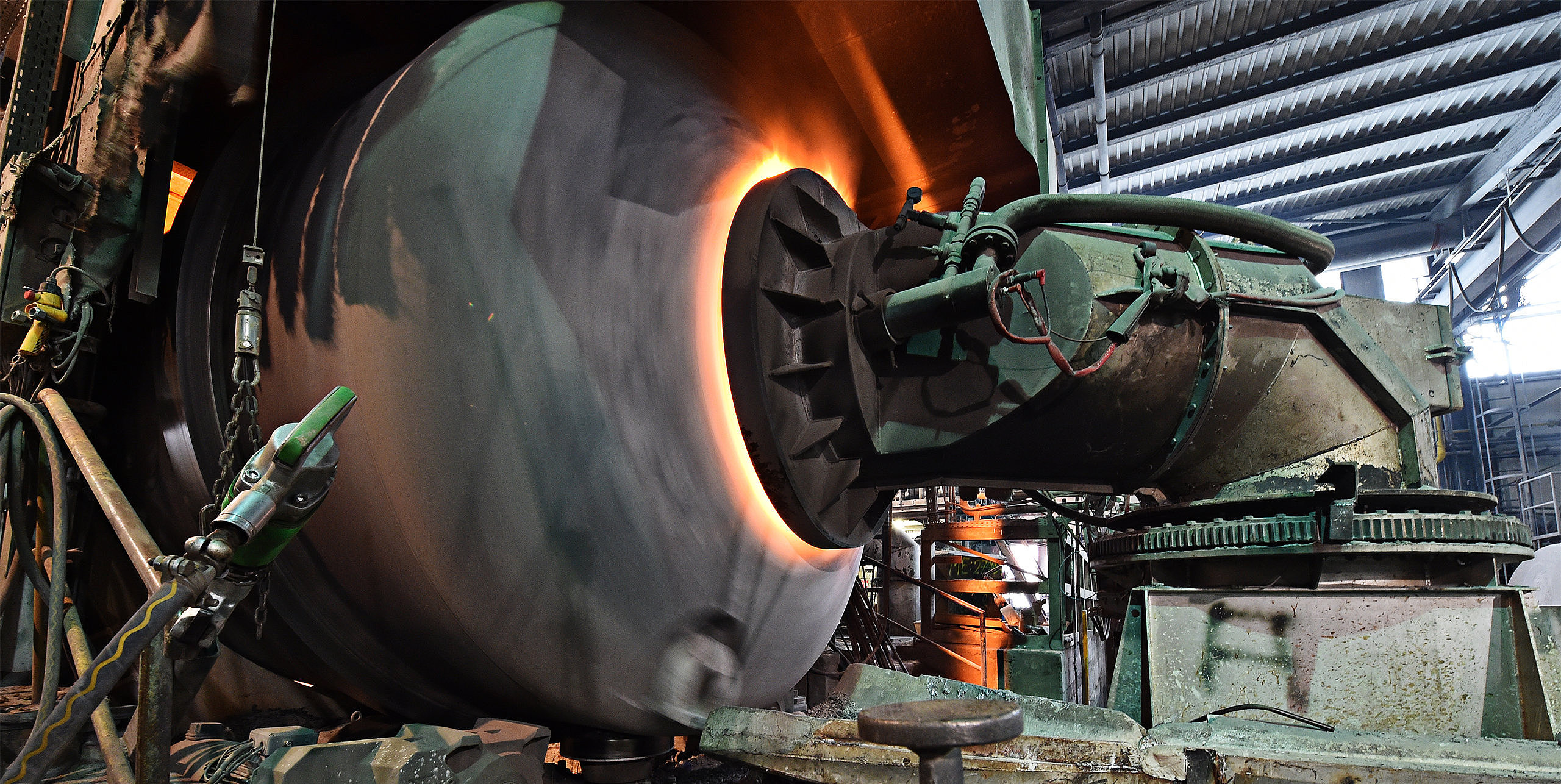
Pilot Study on “Climate-Friendly Process Heat”
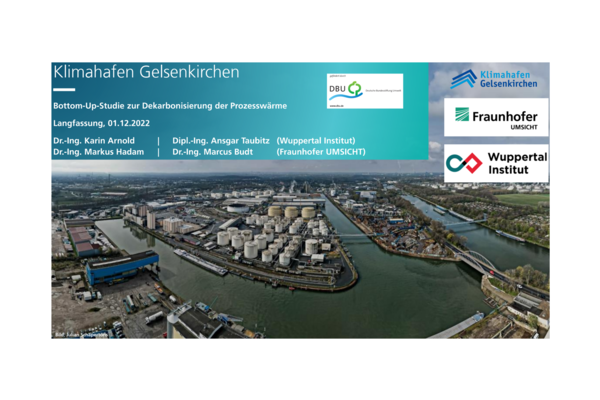
To answer the technical and economic questions in the pilot project “Climate-Friendly Process Heat” of the Klimahafen Gelsenkirchen initiative, a short study was carried out with funding from the German Federal Environmental Foundation (DBU). The study was supported by institutional and corporate partners of the initiative and coordinated by the Science Park Gelsenkirchen.
Internationally competitive companies are under increasing pressure to decarbonise their production processes—driven in part by progressively stricter climate targets—and to choose the most economically viable and sustainable technological pathway. In principle, two basic options are available: conversion of existing systems to use a climate-neutral fuel gas (e.g. green hydrogen), or a switch to direct electric processes based on green electricity (e.g. high-temperature heat pumps or induction heating). However, for industrial high-temperature heat applications (e.g. industrial furnaces, burners, combustion plants), it remains unclear which path is preferable from a business, technical, and infrastructure-related macroeconomic perspective.
The Klimahafen Gelsenkirchen initiative brings together 17 companies from a wide range of industries. Supported by the North Westphalia Chamber of Industry and Commerce (IHK), the City of Gelsenkirchen, and the Science Park Gelsenkirchen, they have joined forces with the goal of transforming the Stadthafen into a climate-neutral industrial and logistics hub. Six of the 17 companies currently use process heat based on natural gas—mostly at high temperature levels (>200°C). Due to its diversity in sectors and processes, this company cluster is representative of a large number of medium-sized enterprises facing similar decarbonisation challenges.
Under current conditions, neither full electrification nor a complete switch to 100% hydrogen is economically feasible for most of these companies. Still, industrial firms relying on process heat are already willing to explore and test decarbonisation technologies in pilot applications and to define the necessary success factors for switching to climate-neutral energy sources at an early stage.
These pioneering companies—ready to invest now—need certainty regarding how the legal and regulatory framework will develop in the coming years.
With this pilot study, the initiative aims to contribute concretely to the national discussion on industrial process heat decarbonisation scenarios, using the process heat cluster at the Stadthafen Gelsenkirchen as an example. Existing national-level studies do not adequately reflect the diversity of sectors and processes in industry. This study is therefore intended to help expand the discussion, with a particular focus on the perspective of small and medium-sized industrial enterprises.
The study is rooted in operational realities: it analyses the current situation, compares different decarbonisation pathways, and links them with future scenarios for the availability and cost of various energy supply options. This provides concrete conclusions for individual companies and for the broader process heat cluster. A series of accompanying workshops highlighted the strategic and political relevance of the topic and underlined the study’s contribution to shaping the national discussion on the future of industrial process heat in Germany.
Would you like to learn more about the study?
Feel free to contact us.